Drawing on decades of academic and civic leadership, Pelton shares how confronting Harvard’s ties to slavery can strengthen communities
By Julita Bailey-Vasco | October 9, 2026
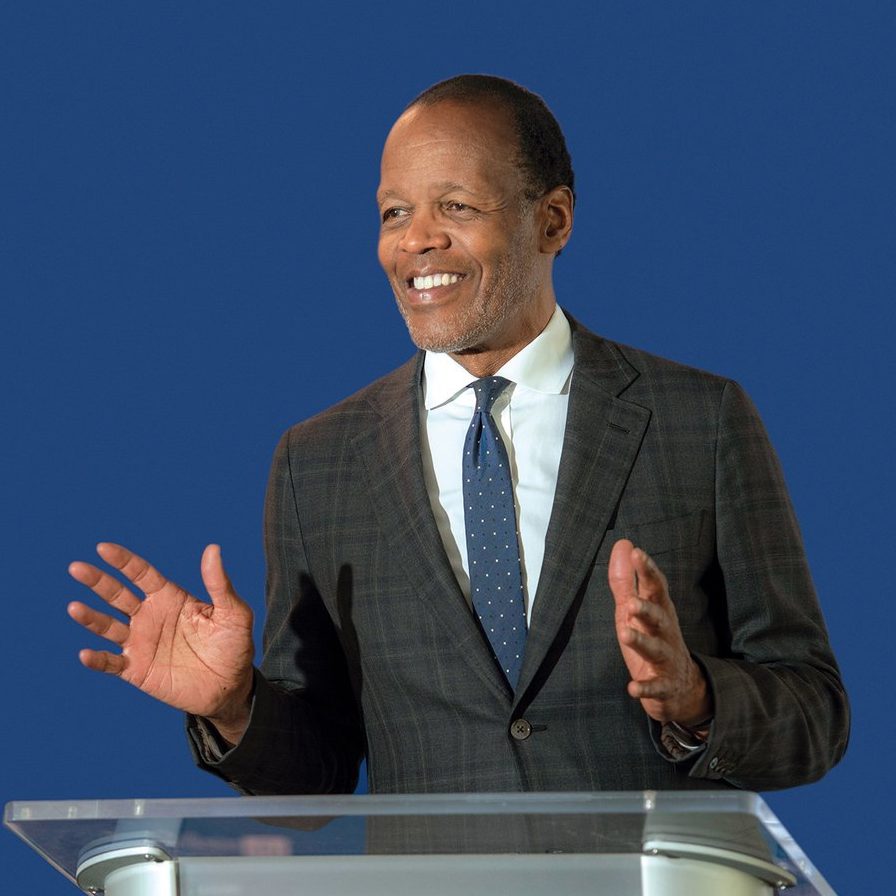
M. Lee Pelton, ‘84 is one of six advisors on the Harvard & the Legacy of Slavery (H&LS) Initiative’s Advisory Council. He is the former President and CEO of The Boston Foundation. Pelton is an influential leader who helped turn the foundation into one of the nation’s most influential community foundations, centering equity and a commitment to strengthening communities in its programs, grantmaking and civic leadership.
As a former college president, Pelton has deep expertise in education, civic engagement, and social justice, guiding Harvard in its engagement with descendant communities through its grant program.
Pelton recently joined the six other advisors and shared his personal reflections on the H&LS Initiative’s work, along with his vision for it, and hopes for the future.
Julita Bailey-Vasco: Why is the work of Harvard & the Legacy of Slavery Initiative important to you? Why is it important for Harvard University to do this work?
Lee Pelton: The 2022 Report of the Presidential Committee on Harvard & the Legacy of Slavery helped the University understand and cast light on its legacies of slavery, with the goal of addressing its enduring consequences to create purposeful change. I think the Report positioned Harvard as part of a larger national reckoning on how universities benefited from slavery.
Its response is a model, particularly for elite universities, for confronting uncomfortable historical truths, pairing historical research with concrete reparative action and integrating this history, not only into teaching and scholarship, but into the public life.
Bailey-Vasco: What is your vision for the Harvard & the Legacy of Slavery Initiative, and what impact are you hoping the Initiative will have long-term?
Pelton: This is important work, not only for Harvard, but for the nation. I see our role as not only a call to action for colleges and universities, but a call to action to the nation to root out racism wherever it exists.
James Baldwin reminds us that not everything that is faced can be changed, but nothing can be changed until it is faced. This work is about truth-telling, and truth-telling is central to the Advisory Council’s work. And our work is to bring recommendations, not only with reference to Harvard, but into public life.
I believe, that central to the Report, and to the Council is the idea of helping people love, understand, and connect with one another in order to move the implementation work of the H&LS Initiative forward.
M. Lee Pelton
Bailey-Vasco: The Harvard & the Legacy of Slavery Initiative’s Advisory Council is composed of eminent scholars and historians. Can you talk a bit about your own expertise, the broader expertise of the Council, and how it’s helping guide this work?
Pelton: I’m honored to participate in this work with national and international scholars and administrators. I’m very humbled to be part of this group of advisors. My work has principally been academic as a college president. Before that, I was at Harvard for quite a while. And before that, I was the dean of Dartmouth College. I bring academic leadership into my role as well as leadership in improving lives and strengthening communities through my work at The Boston Foundation. The foundation has enabled me to focus on understanding the barriers communities face along with the root causes of those barriers through coalition building. With this lens, I have been able to advise the H&LS Initiative on its grantmaking efforts with the goal of deep impact and ensuring descendant communities are centered throughout the grantmaking process.
Bailey-Vasco: What’s the one thing you would like the broader community – at Harvard and beyond – to know about this Initiative?
Pelton: Nelson Mandela once said that no one is born hating another person because of the color of their skin. People must learn to hate, and if they can learn to hate, they can be taught to love. And so, I believe, that central to the Report, and to the Council is the idea of helping people love, understand, and connect with one another in order to move the implementation work of the H&LS Initiative forward.
Bailey-Vasco: What can we learn from other institutions that have embarked on the journey of reckoning with their ties to slavery?
Pelton: We can learn from other institutions embarking on the legacy of slavery work and their courage to shine a bright light on their history. I hope that we too can embolden other universities to do the same.