Drawing on work in restorative justice, Minow shares how research and memorialization can help Harvard confront harm and strengthen its future
By Julita Bailey-Vasco | October 9, 2026
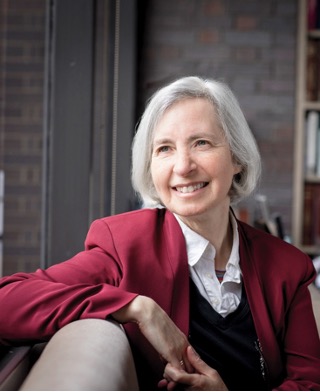
Martha Minow is one of six advisors on the Harvard & the Legacy of Slavery (H&LS) Initiative’s Advisory Council. Following her membership on the committee developing the 2022 Report of the Presidential Committee on Harvard & the Legacy of Slavery, Minow helped guide the H&LS Initiative’s first phase of implementation work in 2023, leading up to the current efforts. She is the 300th Anniversary University Professor and former dean of Harvard Law School. Minow’s expertise is in constitutional law and human rights with a focus on exclusion and discrimination, legal responses to social, political, and religious conflict, and legal treatments of communications and new technologies.
Minow recently joined the six other advisors and shared her personal reflections on the H&LS Initiative’s work, her vision for it, and her hopes for the future.
Julita Bailey-Vasco: Why is the work of Harvard & the Legacy of Slavery Initiative important to you? Why is it important for Harvard University to do this work?
Martha Minow: Harvard is an institution devoted to learning and building knowledge, and I’ve been lucky to spend most of my career at Harvard. And yet I had never encountered any mention of Harvard’s connections with slavery, or indeed how Harvard had made its money, until the work of inquiry led by Radcliffe Dean Tomiko Brown Nagin at the behest of President Lawrence Bacow began.
I was lucky to spend a fair amount of the pandemic period working on the Report of the Presidential Committee on Harvard & the Legacy of Slavery. The more that I and others learned, the more it seemed incumbent upon us to make sure that no future generations would go forward at Harvard not knowing the University’s ties to slavery. And the more that we immersed ourselves in this history, the more important it seemed to take actions that would reflect a commitment to be a different kind of institution. And that’s what the Report’s recommendations called for, and I think that’s what the work of the H&LS Initiative has been about.
Bailey-Vasco: What is your vision for the Harvard & the Legacy of Slavery Initiative and what impact are you hoping the Initiative will have long-term?
Minow: I am only one of many people working to realize the vision of the recommendations put forward in the Report. I think that the key commitments to attend to involve supporting descendant communities, expanding the research to ensure memory and memorialization of those enslaved by Harvard affiliates, and building connections with historically Black colleges and universities are important. While doing this work, it also became clear that Indigenous communities have a strong and important history that Harvard has to reckon with.
The work of the Advisory Council and indeed of the H&LS Initiative as a whole
Martha Minow
is focused on addressing harm. We don’t ignore our past. We actually stand against the erasure of the past.
Bailey-Vasco: The Harvard & the Legacy of Slavery Initiative’s Advisory Council is composed of eminent scholars and historians. Can you talk a bit about your own expertise, the broader expertise of the Council, and how it’s helping guide this work?
Minow: I am not a historian, so I have the good fortune to learn from supremely talented and experienced historians. Their guidance around issues, including how to conduct and oversee the research on direct descendants, has been essential.
As a legal scholar, I can say that there is a dimension of work that connects to my research and practice that is not only about civil rights and constitutional law, but also about restorative justice and reconciliation with the past. The United States, in general, is less experienced than some other nations in actually addressing the dimensions of our past that continue to define people’s lives. The work of the Advisory Council and indeed of the H&LS Initiative as a whole
is focused on addressing harm. We don’t ignore our past. We actually stand against the erasure of the past. Erasure is always tempting when it involves trauma and violations of human rights. But we are better than that, and our descendant communities deserve better than that. I have studied and learned that many countries such as South Africa, Germany, and Canada, have confronted very, very dark periods in their past and are stronger as a result. These learnings are something that I bring to this work.
Bailey-Vasco: What’s the one thing you would like the broader community – at Harvard and beyond – to know about this Initiative?
Minow: One thing I’d like people to know is that students are involved in the work of the H&LS Initiative. When students find opportunities to conduct their own research and to participate in anything from taking a tour of Harvard with a different angle to actually changing their own research and work agendas while they’re students and thereafter, that has been exciting to watch.
Bailey-Vasco: What can we learn from other institutions that have embarked on the journey of reckoning with their ties to slavery?
Minow: There’s much to learn. There’s no place that has figured out in some full way how to reckon with terrible chapters of their history. But each of the places and countries that I have studied has offered something to learn. For example, the role of education is central in South Africa, where the work of the Truth and Reconciliation Commission helps to influence the curriculum and work of schools.
Canada has offered learnings around memorialization. Not just physical memorials, but days of remembrance and how to deal with the issues of residential schools and the very disturbing treatment of their First Nations children and young people. Their work around this has evolved into developing an ongoing process of collaborative perspectives addressing the issues in the community. There’s a lot to learn from that.