
A leading scholar of law and history, Gordon-Reed shares why confronting Harvard’s ties to slavery is essential to the University’s educational mission
By Julita Bailey-Vasco | October 9, 2026
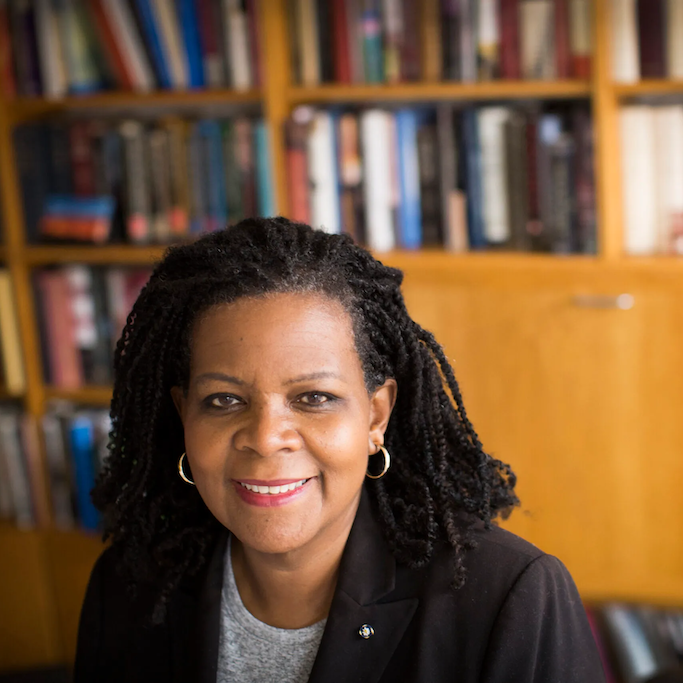
Annette Gordon-Reed is one of six advisors on the Harvard & the Legacy of Slavery (H&LS) Initiative’s Advisory Council. She is the Carl M. Loeb University Professor at Harvard, teaching both law and history. Gordon-Reed’s research centers on slavery in Virginia and the early American republic, examining how the institution of slavery shaped families and lives across generations. Specifically, Gordon-Reed’s scholarship focuses on Monticello—Thomas Jefferson’s plantation—including the Hemings family and the long-debated question of whether Jefferson had children with an enslaved woman.
Through research on the 18th century and the early United States, Gordon-Reed has explored how African American families struggled to remain together under slavery’s constant threat. It is through this lens that Gordon-Reed is committed to guiding Harvard’s efforts with descendant engagement, showing how the ties with and impacts of slavery are still with us today.
Gordon-Reed recently joined the six other advisors and shared her personal reflections on the H&LS Initiative’s work, her vision for it, and her hopes for the future.
Julita Bailey-Vasco: Why is the work of Harvard & the Legacy of Slavery Initiative important to you? Why is it important for Harvard University to do this work?
Annette Gordon-Reed: As an African American, I have felt such a debt to the people who persevered under the terrible circumstances of slavery and lived and raised children.
As a scholar, I have tried to maintain enslaved people’s dignity and humanity even though we don’t know much about them. I have made it part of my life’s work to make what little information that’s available about enslaved people known – to keep their memory, their struggle, and their circumstances alive.
It’s important for Harvard to do this work because in telling the story of its history, the story of American history is being told. And that’s always important for us to know. But it’s also for the larger Harvard community to know where we came from and how we got to where we are. Harvard is an important institution, not just in the country but in the world. And we need to know its entire story.
Bailey-Vasco: What is your vision for the Harvard & the Legacy of Slavery Initiative and what impact are you hoping the Initiative will have long-term?
Gordon-Reed: My vision for the work of the H&LS Initiative is three-fold. I hope that it will inspire Harvard students to become scholars, and to think more broadly about Harvard’s history and about American history. I also hope that the work of the Initiative will have an impact outside of the Harvard community and that the stories of Harvard’s ties to slavery echo’s down through the generations. And lastly, I hope that Harvard can be an example to other institutions as Brown University was an example for us.
This work proceeds from a genuine desire to educate people, which is tied to the mission of Harvard.
Annette Gordon-Reed
Bailey-Vasco: The Harvard & the Legacy of Slavery Initiative’s Advisory Council is composed of eminent scholars and historians. Can you talk a bit about your own expertise, the broader expertise of the Council, and how it’s helping guide this work?
Gordon-Reed: I am a professor and a historian. My dual role as a law professor and a historian informs the way I look at the problems and look at the situations that Harvard’s legacy of slavery initiative has uncovered.
For example, slavery was a legal institution, and it had the support of the law, and it was carried out by the law. It affected the legal institution as a whole, not just the rules pertaining to slavery, but it shaped people’s understanding of justice. As an advisor, I bring the perceptions and the knowledge of a historian, but also some of the questions of a lawyer and a legal scholar about how the law fits into the system of slavery where people were treated as property.
Bailey-Vasco: What’s the one thing you would like the broader community – at Harvard and beyond – to know about this Initiative?
Gordon-Reed: This work proceeds from a genuine desire to educate people, which is tied to the mission of Harvard. Some people think that this type of work is only about politics, but there is a deep sincerity and desire to make learning about Harvard’s legacy of slavery a part of the educational mission of the University. This is not something illegitimate. It is part of a parcel of what Harvard is supposed to be doing. I want people to know that this work is for real, and the people behind it are for real.
Bailey-Vasco: What can we learn from other institutions that have embarked on the journey of reckoning with their ties to slavery?
Gordon-Reed: We learned from Brown University that we’re going to face criticism, and we’re going to make enemies, but we have to persevere.