
Through reflection, silence, and ritual, the guided tour educates participants on Harvard’s legacy of slavery while honoring the past and present
By Laurie Rodriguez | July 30, 2026
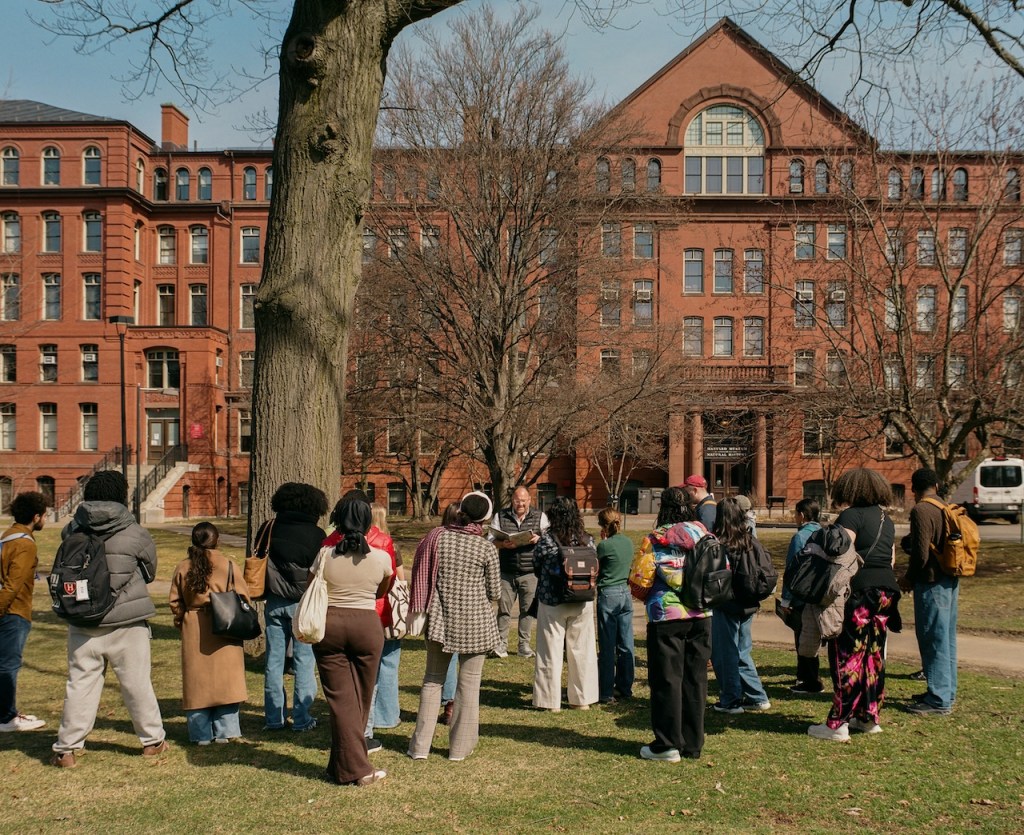
A bell rings in Radcliffe Yard and minutes of silence follow, lingering above the noise of the usual din of traffic and city chatter enveloping the Harvard campus. In this ritual of the bell, silence makes room for grief, reflection, and acknowledgment of how Harvard’s land and buildings are enmeshed in the University’s financial and intellectual ties to slavery.
Radcliffe Yard is just one of six stops on the Landscape of Slavery at Harvard Guided Tour. Led by University Chaplains and students from Harvard Divinity School and other Schools, the tour, open to anyone, takes participants through historic sites noted in the Report of the Presidential Committee on Harvard & the Legacy of Slavery. As part of Recommendation 2 in the Report, the tour educates participants about Harvard’s historical ties to slavery and brings awareness to often-overlooked stories of people who were enslaved – and of the Harvard leaders, faculty, or staff who were enslavers. The tour uses a spiritual and experiential framework to move findings of the Report from words on a document into a contemplative experience.
To date, over 1,000 people have participated in the tour. Group and private tours are offered, including tours for Harvard classes. Tiya Miles, Michael Garvey Professor of History and Radcliffe Alumnae Professor, invited her class to participate in a tour this past spring. Her classroom was made up of undergraduate and graduate students studying various subjects, yet their common interest was thinking about how the past matters to the present while considering how history lives, moves, and functions in the world beyond the classroom.
Miles was a member of the Presidential Committee on Harvard & the Legacy of Slavery and contributed to the creation of the Report released in 2022. During the research phase of the Report, she examined documents and texts to uncover history. Miles said that participating in the tour helped her move from the page to visualizing the past in a different way. She expected her students to experience something similar.
“My students were in those places not for the first time, but for the first time with this kind of lens,” Miles said. “I’m sure they were very struck by the way in which engaging in this tour, hearing these names, and hearing these stories transformed how they felt on the grounds.”
Developing the tour
The tour was developed by University Chaplains Rita Powell, Dan Smith, and former Chaplain Alden Fossett and serves as an example of the H&LS Initiatives’ commitment to memorialize those who were enslaved by Harvard affiliates by educating groups internal and external to Harvard about the University’s ties to slavery. Through creating a space for contemplation, the tour helps people process the difficult truths of the University’s history. Smith was a lecturer at Harvard Divinity School and served as Senior Minister at First Church in Cambridge, where he examined the church’s ties to slavery. Because First Church and Harvard share deep historical ties dating back to the founding of both institutions in 1636 and because their legacies of slavery were intertwined, he was invited to serve on the Presidential Committee on Harvard & the Legacy of Slavery.
As chaplains, they have a unique perspective to contribute to this work of reckoning with history. Powell said that Harvard Chaplains are positioned to think about the University as a whole – students, faculty, staff, visitors – and share a commitment to serving the spiritual needs of the Harvard community, working in interfaith and multifaith spaces.
“History like this is not only something we learn intellectually. It lands in people’s minds, bodies, emotions and spirits,” Smith said. “Chaplains are trained to offer a warm, non-anxious, pastoral presence that can meet people wherever they are.”
The student experience was top of mind for the chaplains when they created the tour. Fossett was a Kellogg Fellow of the Harvard Episcopal Chaplaincy and a recent graduate from Harvard College at the time. “He was very keyed into the student experience, and he was the one who first realized that when the Report was released in 2022, it would impact students and they would need some care. There needed to be some framework to care for that jarring information to come into the system,” said Powell.
Within this framework, they incorporated quiet forms of ritual and reflection to accompany the history described in the tour, ensuring the material also honored the enslaved persons who were mentioned. “Throughout the tour we intentionally weave together historical scholarship with simple practices of silence, reflection, and attentiveness,” Smith said. “We mark moments of silence with a chime. We invite participants to notice their bodies and their surroundings — the land, the trees, the water — and create moments for people simply to think on what is arising within them. The goal isn’t discussion or debate in those moments. It’s to honor those whose stories have too often been overlooked while helping participants remain grounded and present.”
…the tour can literally ground a sense of purpose in the land beneath our feet and in the history it carries.
Dan Smith
Connecting to the local community
An important element of the tour is demonstrating that entanglements with slavery were not limited just to Harvard but were part of New England history, a history that many may not be aware of, which creates a path for the local community to get involved in this work of reckoning. By integrating the University into its surrounding environment, local community members can begin to uncover Harvard, Cambridge, and Boston’s past and how these legacies of slavery continue to permeate society today.
Powell noted that the tour also has the ability to break down imaginary divisions between the University and the surrounding community. “I know this tour has been a really great bridge where people feel that they’ve been invited in and suddenly have access to, and even a sense of belonging to the University that’s different. It just creates that porousness,” Powell said.
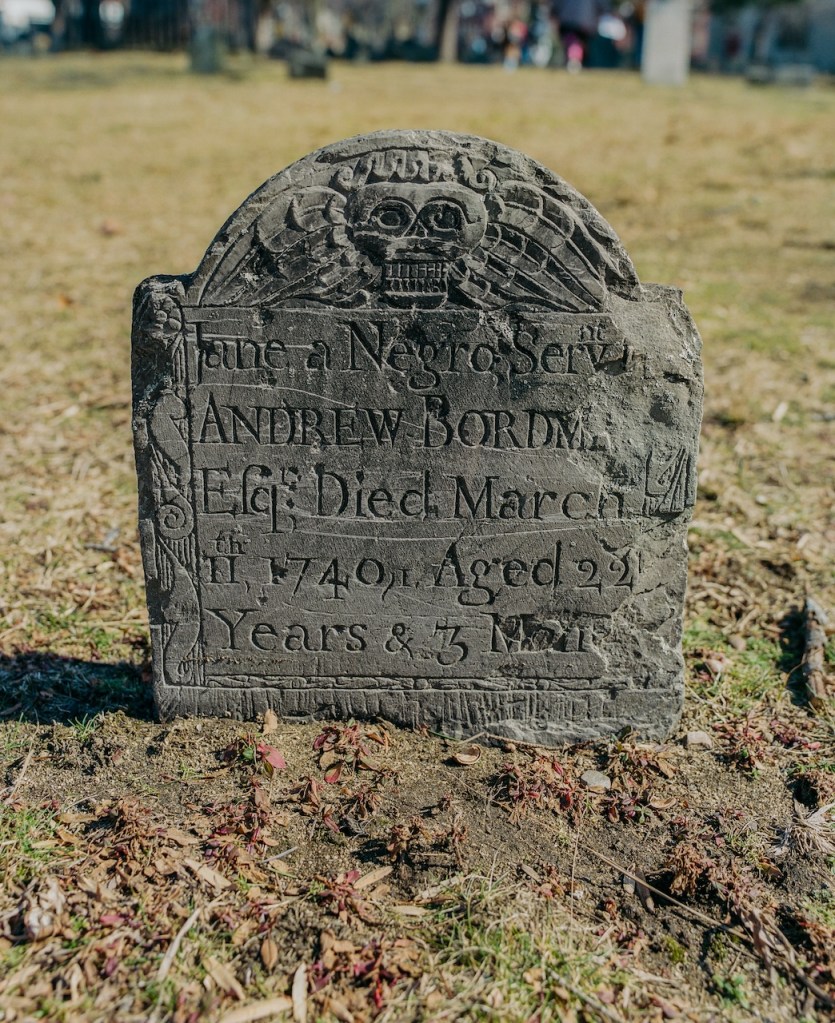
Smith walked past the Old Burying Ground for more than 25 years as a Harvard Divinity School student, teacher, and pastor. Before the development of the tour, where the Grounds would become a stop, he was unaware of the graves that were there for two enslaved young women – Jane and Cicely. Cicely was enslaved by Reverend Minister William Brattle, the fifth minister of First Church in Cambridge. Now, whenever he travels by the cemetery, he reflects on the history and how its legacies continue in the inequalities that exist today.
“I think something similar happens for many tour participants, whether they’re affiliated with Harvard, a direct descendant of this history of enslavement, or someone who is curious about the content; it can be especially powerful for people who live in or regularly pass through places like Cambridge, the Arnold Arboretum, or other locations included in the tour,” Smith said. “The experience invites local residents to see themselves as part of an unfolding history, hopefully in ways that honor those who came before us and that call us to take responsibility in the present. When I lead community groups, the tour can literally ground a sense of purpose in the land beneath our feet and in the history it carries.”
Guided tour dates typically take place from August to November and from March to June. Register for a tour on the Eventbrite page. For private tours, classes, or groups interested in participating in the tour, contact legacyofslavery@harvard.edu.