Why Harvard’s Legacy of Slavery Initiative matters
By Julita Bailey-Vasco | October 9, 2026
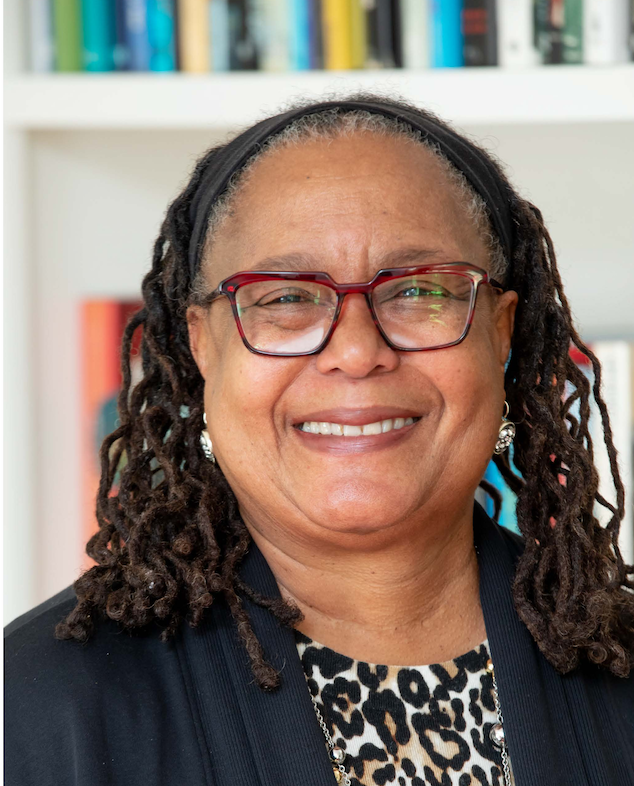
Evelynn Hammonds is one of six advisors on the Harvard & the Legacy of Slavery (H&LS) Initiative’s Advisory Council.
She is a historian of science and medicine and public health with a particular focus on the history of scientific and medical racism. As the Barbara Gutmann Rosenkrantz Professor of the History of Science and Professor of African and African American Studies, Hammonds also conducts research in the areas of women, gender, and sexuality studies through the lens of black feminist theory and practice. Hammonds is an alumna of Spelman College, the Georgia Institute of Technology, and the Massachusetts Institute of Technology. She advises the H&LS Initiative in its work to deepen partnerships with historically Black colleges and universities (HBCUs) through efforts like the Du Bois Scholars Program.
Hammonds recently joined the six other advisors and shared her personal reflections on the H&LS Initiative’s work, her vision for it, and her hopes for the future.
Julita Bailey-Vasco: Why is the work of Harvard & the Legacy of Slavery Initiative important to you? Why is it important for Harvard University to do this work?
Evelynn Hammonds: I am happy to see that many universities have started looking very closely at the history of their institution’s relationship to slavery. Since Harvard is the oldest university in the United States, I am glad that it also began looking at its ties to slavery, resulting in the culmination of the Report of the Presidential Committee on Harvard & the Legacy of Slavery.
Many people find it difficult to talk about slavery. It’s uncomfortable and unsettling. But as an educational institution, it is critical that we face our past in order for us to understand our history and our present.
I think the Initiative is important because students, faculty, and everyone in this institution need to understand the complex history of this country and not just the wonderful and laudatory events that Harvard has played an important role in, but also the darkest moments, and our institution’s role within those moments as well.
Many people think of slavery as largely an institution in the southern United States. But this is a mistaken view; in fact, slavery existed across the United States, including in Massachusetts.
Bailey-Vasco: What is your vision for the Harvard & the Legacy of Slavery Initiative and what impact are you hoping the Initiative will have long-term?
Hammonds: I think that the set of recommendations that came out of the 2022 Report of the Presidential Committee on Harvard & the Legacy of Slavery serve as reminders and signposts of our history.
My vision is that the set of programs we are supporting under the Initiative form the building block for the issues that we need to engage with as we move toward a deeper understanding of the significant impact and lasting legacy of slavery. As part of the Initiative’s work in deepening partnerships with HBCUs, I continue to work directly with the Du Bois Scholars Program, which supports the academic development of talented students who attend HBCUs. These students come to Harvard for nine weeks to engage in cutting-edge research with faculty mentors and their peers.
…Harvard as an institution is deeply embedded in American history. The Initiative reminds us that there are many aspects of history that are uncomfortable and unsettling as well as many that are worthy of celebration.
Evelynn Hammonds
Bailey-Vasco: The Harvard & the Legacy of Slavery Initiative’s Advisory Council is composed of eminent scholars and historians. Can you talk a bit about your own expertise, the broader expertise of the Council, and how it’s helping guide this work?
Hammonds: Let me begin with a bit of my history. When I was an undergraduate student, I was in a dual degree program at Spelman College and Georgia Tech, graduating with degrees in physics and electrical engineering.
While in college, I spent two summers working in a research program at Bell Telephone Laboratories, one of the premier industrial laboratories in the country. For example, the transistor was invented at Bell Labs. Those summers spent at Bell Labs changed my life from seeing myself as just a science student to thinking of myself as a scientist. My research at Bell Labs taught me how to deal with open-ended questions – beyond working on answers to problem sets. And I got to know and work with people from all over the world.
Those summers at Bell Labs led to my belief that getting undergraduate students involved in research early supported their interest in science as a career and a calling. During my time as Dean of Harvard College, and throughout my career, I have participated in and supported many such programs in science, the humanities and the social sciences and I have seen how undergraduate students have enthusiastically responded to being engaged in research.
The most important goal of the Du Bois Scholars Program, in my view, is to expand research opportunities in the sciences, humanities, and social sciences to students by bringing them to Harvard to engage in cutting-edge research projects. Another key component of the program is to foster interactions among students who come from all over the world as we do every day here at Harvard. I want the students to experience what I experienced at Bell Labs. I want them to engage with all kinds of research projects with students and faculty from many backgrounds while exploring complex questions and problems and finding joy in research itself.
Bailey-Vasco: What’s the one thing you would like the broader community – at Harvard and beyond – to know about this Initiative?
Hammonds: Again, Harvard as an institution is deeply embedded in American history. The Initiative reminds us that there are many aspects of history that are uncomfortable and unsettling as well as many that are worthy of celebration. And ultimately understanding our complex history can give us a greater perspective of our role in the world now and in the future.
Bailey-Vasco: What can we learn from other institutions that have embarked on the journey of reckoning with their ties to slavery?
Hammonds: I don’t think that’s an easy question because I think we’re all on a journey right now. The more institutions that work together, the more history can be made known. I believe deeply in the words from the 2022 Report, “…Through these endeavors we can advance both the University’s commitment to the transformative power of education and our mission to develop ethical leaders who respect the ‘rights, differences, and dignity’ of all people.”